Construction of 7km Lungi Bridge in Sierra Leone Background: The government of Sierra Leone intend to construction a 7Km length of bridge across the Sierra Leone River estuary. T he proposed infrastructure development is to construction a &km length of bridg4e across the productive river estuary in Freetown. The Lungi Bridge project seeks to remove the travelling nightmare from the visitors and citizens coming and going out of Sierra Leone. The capital city is located across the river on the south coast of the Atlantic Ocean while the airport is across the river from the city on the north of the Atlantic. Traveling to access the city has been a nightmare since the beginning. From the airport is another set of journeys by road and crossing the estuary by either the Ferry, Hovercraft, engine powered boat, canoe or to over 183km through by road. The entire process makes the journey tiresome and boring. This has long und...
Posts
6.11 Discussion: What are the future climate risks where you live?
- Get link
- X
- Other Apps
My country Sierra Leone has been considered as one of the vulnerable countries to suffer from the impacts of climate change and exposed to further risks. Sierra Leone is projected to experience a range of impacts from climate change in the coming decades, including increased temperatures, changes in precipitation patterns, and more frequent extreme weather events such as droughts and floods. The country is within west Africa, and for any huge impact may affect the country. The Intergovernmental Panel on Climate Change (IPCC) report for west Africa countries, including Sierra Leone on temptation rise are projected to increase by between 1.5°C and 3°C by mid-century (IPCC, 2018). This increase in temperature will affect the following significant sectors in Sierra Leone. Agriculture: Sierra Leone population rely on agriculture as source of food and livelihoods, The country is richer with underground and surface water resources for drinking and industrial activities. These qu...
6.7 Activity: Investigate how climate modelling has changed over time
- Get link
- X
- Other Apps
Climate models have drastically improved from a century ago. Before the twenty century, climate models where use manually by sketching of equations on papers and solve the mathematical problems to forecast the climate change. This was the same method used to predict the weather. From the 1960s, the climate models have improved by using computer programs that incorporate a wide range of physical, chemical, and biological processes that affect the Earth's climate. Supercomputers are now used to solve complex mathematical equations that simulate the interaction between the atmosphere, cryosphere, lithosphere, and the biosphere. The improved models can now compute huge amount of data within less time than before. The global climate models can calculate global, regional and local data as may require than before . Modern global climate models are based on complex mathematical equations that simulate interactions between the atmosphere, oceans, land surface, and ice sheet...
1.13 Activity: Investigate the causes of climate change
- Get link
- X
- Other Apps
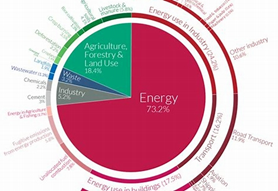
Climate change is cause by both natural and manmade influences. Climate change occurs naturally by geological of volcanic activity, and changes in the amount of solar radiation causing fluctuations in global temperatures and climate patterns, which can have significant impacts on ecosystems and human societies. Secondly, considerable evidence of attributing anthropogenic influence to climate change has long been gathered since the Third Assessment Report (TAR) by IPCC. These evidence were based on the global increase in the earth system and other variables. The human activities release greenhouse gases (GHGs) into the atmosphere, which trap heat and lead to an increase in the Earth's temperature. The main human activities responsible for GHG emissions include burning fossil fuels for energy, deforestation, and intensive agricultural practices are explained below by sectors. 1. Energy, burning Fossil Fuels: The burning of coal, oil, and gas for energy is the primary source of GHG em...
7.12 Discussion: Where could the ‘nexus’ approach be applied in future? Climate change and migration
- Get link
- X
- Other Apps
climate change and migration Climate change and migration are two pressing issues of our time. Climate change has led to severe weather events such as floods, droughts, heatwaves, and hurricanes, which have caused damage to crops, infrastructure, and livelihoods. As a result, people are increasingly moving to seek better living conditions and opportunities. This phenomenon is known as climate-induced migration, and it poses complex challenges for policymakers and practitioners. Climate-induced migration is not a new phenomenon, but it is gaining attention as the effects of climate change become more severe. According to the Internal Displacement Monitoring Centre (IDMC), an estimated 17.2 million people were displaced by climate-related disasters in 2018 alone. This number is expected to increase in the coming years as the impacts of climate change become more widespread. The link between climate change and migration is not straightforward, and it is influenced by various fact...
7.8 Reading and activity: Food-energy-water nexus
- Get link
- X
- Other Apps
To overcome the challenge food, water and energy nexus is two-way approach, one is to break the divergence and bring consistencies in the sector. And second is the appreciate and manage well the ecosystem service. There are other cross cutting ways of addressing the challenges such as harmonizing the policy amongst the 3 sectors, considering the way they are interrelated across the sector and level of operation, also to involve the stakeholders and beneficiaries of the resources and the service provided by the ecosystem. Mix together the planning and management of the water, energy and food resources lessen different sector’s differences enhance the sustainable use of the resources and to limit environmental impact. I nterpectoral externalities, tap synergies and co-benefits across sectors and scales, enhance resource use efficiency, and reduce environmental impacts. It is also important to manage well the demand and use of the water and energy by enforcing policies and...
7.4 Reading: Planetary boundaries
- Get link
- X
- Other Apps
7.4 Reading: Planetary boundaries 1. What are the nine planetary boundaries? These nine planetary boundaries are · Climate change (CO2 concentration in the atmosphere <350 ppm and/or a maximum change of +1 W m-2 in radiative forcing); · Ocean acidification (mean surface seawater saturation state with respect to aragonite ≥ 80% of pre-industrial levels); · Stratospheric ozone (<5% reduction in O3 concentration from pre-industrial level of 290 Dobson Units); · Biogeochemical nitrogen (N) cycle (limit industrial and agricultural fixation of N2 to 35 Tg N yr-1) and phosphorus (P) cycle (annual P inflow to oceans not to exceed 10 times the natural background weathering of P); · Global freshwater use (<4000 km3 yr-1 of consumptive...
Changes in Climate Over the Last 100 Years
- Get link
- X
- Other Apps
Changes in Climate Over the Last 100 Years Climate has undergone significant changes in the last century, and the evidence supporting this fact is overwhelming. The rise in global temperatures, melting of ice caps, and changes in rainfall patterns are just a few examples of the effects of climate change. It is essential to understand the extent of these changes, their causes, and their potential consequences to develop effective strategies to mitigate and adapt to their impacts. Evidence and uncertainties The evidence of climate change is supported by numerous studies, including those by the Intergovernmental Panel on Climate Change (IPCC). The IPCC has found that the Earth's average surface temperature has risen by 0.85 °C between 1880 and 2012. This increase is primarily due to human activities such as burning fossil fuels, deforestation, and agriculture. Furthermore, the concentration of carbon dioxide (CO2) in the atmosphere has increased from 280 ppm to 400 ppm,...
4.7 Reading: Climate change and the Syrian civil war revisited
- Get link
- X
- Other Apps
What flaws do the authors highlight in relation to sub-theses underpinning claims linking climate change with the Syrian civil war ? The authors bluntly disagreed with the claims submitted by the sub-theses that human activities in releasing greenhouses actually connects with the drought in Syria, they argued that this drought never caused the massive migration of people, neither the migration itself was the cause of the Syria civil war. The authors therefore described all these claims as errors and need to be investigated further, or except if there have been emerging proofs, otherwise the Syria civil war was not connected to the claimed climate change impact of the drought. The writers suggested that the claims by the UN secretary Ban Ki moon is rather the opposite, as they deemed that the claimers could have mentioned political and economic situations as influencers to the Darfur War. To conclude if have the feeling that the writers may not have any believe that climate chan...
4.6 Reading: Climate change in the Fertile Crescent
- Get link
- X
- Other Apps
How do the authors link climate change with the Syrian conflict? The authors first and foremost considered Syria vulnerability to climate change as the effect poor governance, unstable agriculture, poor environmental policy, high crime rate and high rate of unemployment. They linked the Syria’ government’s weak and poor enforcement of environmental policy as a catalytic factor that increased human action that induced climate change and described the 3 years’ drought as the speedy effect to political instability. What problems might occur in making these connections? It is obvious that making these connections would create political insights that may lead to conflict. The government initiatives to increase farming activities, allocate more land and subsidized fuel all threatened the availability of water, the ground water will be more exploited and risk to more drought and water conflict. Who was most affected by the Syrian drought, and in what ways? The greater fertile ...
3.14 Reading: Assessment preparation
- Get link
- X
- Other Apps
SPECIAL REPORT ON THE OCEAN AND CRYOSPHERE IN A CHANGING CLIMATECH IPCC Summary for Policymakers The ocean and the cryosphere are very important habitant to the lives of the billions of people in the world. The change in the ocean temperature will affect communities closed to Islands, mountains, coastal areas greatly. Observed changes and impacts A.1. The cryosphere has melt, ice sheets, and glaciers levels have reduced with assurance of the increased in earth’s temperature. Impacting on the layers of the snow cover, and temperature of the sea. Increased in the surface temperature has resulted to more coastal land degradation, impact on the high mountain communities, density stratification in the upper 2000m of the ocean and deterioration of the snow cover. The permafrost temperature has increased across the polar and mountain regions. Arctic and boreal permafrost contained more organic CO2 than the CO2 in the atmosphere. In t...
3.2 Wiki glossary: How do ocean currents work?
- Get link
- X
- Other Apps
What are gyres? A gyre is a large system of rotating ocean currents. There are five major gyres, which are large systems of rotating ocean currents. The ocean churns up various types of currents. Together, these larger and more permanent currents make What is the Coriolis effect? Coriolis effect occurs due to the movement of the wind alone the ocean surface, the wind pulls the surface water alone and the action create current that flow west wards. The force then occurs as the result of the earth rotation. What is thermohaline circulation? Thermohaline circulation is the process when the ocean water become colder towards the pole, forming ice on the surface, but the salt sinks making the deeper water more saline and denser and create a deeper current, the space that is created on the surface is then refilled from the What is the global conveyor belt? The global ocean conveyor belt oc...
1.5 Reading: Climate change and the greenhouse effect
- Get link
- X
- Other Apps
· What major climate anomalies and episodic events occurred in 1998? The world disaster events, and warmest year was recorded in 1998 and same year China experienced devastating floods affecting many millions of people. What environmental hazards are associated with climate change and who is most affected? Windstorm, hurricanes, typhoons, flooding, heatwave, tornados and drought, are climate change related environmental hazards affecting millions of people on earth. However, people in Africa and part of Asia (Bangladesh in low land) are most affected bec...
Activity 1.9
- Get link
- X
- Other Apps
https://guardian.ng/apo-press-releases/west-africa-hard-hit-by-climate-crisis-as-deadly-floods-decimate-lives-and-livelihoods/ https://guardian.ng/apo-press-releases/west-africa-hard-hit-by-climate-crisis-as-deadly-floods-decimate-lives-and-livelihoods/ Article is about the recent catastrophic impacts of climate change in West and Central Africa countries and explain the importance of emergency preparedness and response plan for climate impacts. This article exposes the extent of vulnerability of West Africa countries to climate change disaster. Flooding is evidence impact of climate change that affect the socio economic /livelihoods of the millions of people in Africa. What is worth noting in this article in the fact that Africa counties are already hit with hunger or food insecurity and with the advent of climate change impact will exacerbate poverty. The article focus on the relationship between climate change impact and food availability, price of food and ...