Posts

6.11 Discussion: What are the future climate risks where you live?

  My country Sierra Leone has been considered as one of the vulnerable countries to suffer from the impacts of climate change and exposed to further risks. Sierra Leone is projected to experience a range of impacts from climate change in the coming decades, including increased temperatures, changes in precipitation patterns, and more frequent extreme weather events such as droughts and floods. The country is within west Africa, and for any huge impact may affect the country. The Intergovernmental Panel on Climate Change (IPCC) report for west Africa countries, including Sierra Leone on temptation rise are projected to increase by between 1.5°C and 3°C by mid-century (IPCC, 2018). This increase in temperature will affect the following significant sectors in Sierra Leone. Agriculture: Sierra Leone population rely on agriculture as source of food and livelihoods, The country is richer with underground and surface water resources for drinking and industrial activities. These qu...
6.7 Activity: Investigate how climate modelling has changed over time

  Climate models have drastically improved from a century ago. Before the twenty century, climate models where use manually by sketching of equations on papers and solve the mathematical problems to forecast the climate change. This was the same method used to predict the weather. From the 1960s, the climate models have improved by using computer programs that incorporate a wide range of physical, chemical, and biological processes that affect the Earth's climate. Supercomputers are now used to solve complex mathematical equations that simulate the interaction between the atmosphere, cryosphere, lithosphere, and the biosphere. The improved models can now compute huge amount of data within less time than before. The global climate models can calculate global, regional and local data as may require than before .   Modern global climate models are based on complex mathematical equations that simulate interactions between the atmosphere, oceans, land surface, and ice sheet...

1.13 Activity: Investigate the causes of climate change

Image
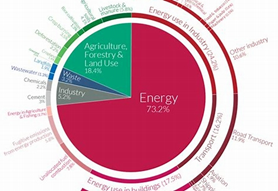
Climate change is cause by both natural and manmade influences. Climate change occurs naturally by geological of volcanic activity, and changes in the amount of solar radiation causing fluctuations in global temperatures and climate patterns, which can have significant impacts on ecosystems and human societies. Secondly, considerable evidence of attributing anthropogenic influence to climate change has long been gathered since the Third Assessment Report (TAR) by IPCC. These evidence were based on the global increase in the earth system and other variables. The human activities release greenhouse gases (GHGs) into the atmosphere, which trap heat and lead to an increase in the Earth's temperature. The main human activities responsible for GHG emissions include burning fossil fuels for energy, deforestation, and intensive agricultural practices are explained below by sectors. 1. Energy, burning Fossil Fuels: The burning of coal, oil, and gas for energy is the primary source of GHG em...

7.12 Discussion: Where could the ‘nexus’ approach be applied in future? Climate change and migration

climate change and migration  Climate change and migration are two pressing issues of our time. Climate change has led to severe weather events such as floods, droughts, heatwaves, and hurricanes, which have caused damage to crops, infrastructure, and livelihoods. As a result, people are increasingly moving to seek better living conditions and opportunities. This phenomenon is known as climate-induced migration, and it poses complex challenges for policymakers and practitioners. Climate-induced migration is not a new phenomenon, but it is gaining attention as the effects of climate change become more severe. According to the Internal Displacement Monitoring Centre (IDMC), an estimated 17.2 million people were displaced by climate-related disasters in 2018 alone. This number is expected to increase in the coming years as the impacts of climate change become more widespread. The link between climate change and migration is not straightforward, and it is influenced by various fact...

7.8 Reading and activity: Food-energy-water nexus

  To overcome the challenge food, water and energy nexus is two-way approach, one is to break the divergence and bring consistencies in the sector. And second is the appreciate and manage well the ecosystem service. There are other cross cutting ways of addressing the challenges such as harmonizing the policy amongst the 3 sectors, considering the way they are interrelated across the sector and level of operation, also to involve the stakeholders and beneficiaries of the resources and the service provided by the ecosystem. Mix together the planning and management of the water, energy and food resources lessen different sector’s differences enhance the sustainable use of the resources and to limit environmental impact.  I nterpectoral externalities, tap synergies and co-benefits across sectors and scales, enhance resource use efficiency, and reduce environmental impacts. It is also important to manage well the demand and use of the water and energy by enforcing policies and...

7.4 Reading: Planetary boundaries

  7.4 Reading: Planetary boundaries   1.       What are the nine planetary boundaries?   These nine planetary boundaries are   ·        Climate change (CO2 concentration in the atmosphere <350 ppm and/or a maximum change of +1 W m-2 in radiative forcing); ·        Ocean acidification (mean surface seawater saturation state with respect to aragonite ≥ 80% of pre-industrial levels); ·        Stratospheric ozone (<5% reduction in O3 concentration from pre-industrial level of 290 Dobson Units); ·        Biogeochemical nitrogen (N) cycle (limit industrial and agricultural fixation of N2 to 35 Tg N yr-1) and phosphorus (P) cycle (annual P inflow to oceans not to exceed 10 times the natural background weathering of P); ·        Global freshwater use (<4000 km3 yr-1 of consumptive...

Changes in Climate Over the Last 100 Years

  Changes in Climate Over the Last 100 Years Climate has undergone significant changes in the last century, and the evidence supporting this fact is overwhelming. The rise in global temperatures, melting of ice caps, and changes in rainfall patterns are just a few examples of the effects of climate change. It is essential to understand the extent of these changes, their causes, and their potential consequences to develop effective strategies to mitigate and adapt to their impacts.   Evidence and uncertainties The evidence of climate change is supported by numerous studies, including those by the Intergovernmental Panel on Climate Change (IPCC). The IPCC has found that the Earth's average surface temperature has risen by 0.85 °C between 1880 and 2012. This increase is primarily due to human activities such as burning fossil fuels, deforestation, and agriculture. Furthermore, the concentration of carbon dioxide (CO2) in the atmosphere has increased from 280 ppm to 400 ppm,...